EarthBone
Hybrid project exploring generation, degradation and the limits between life, matter and image.
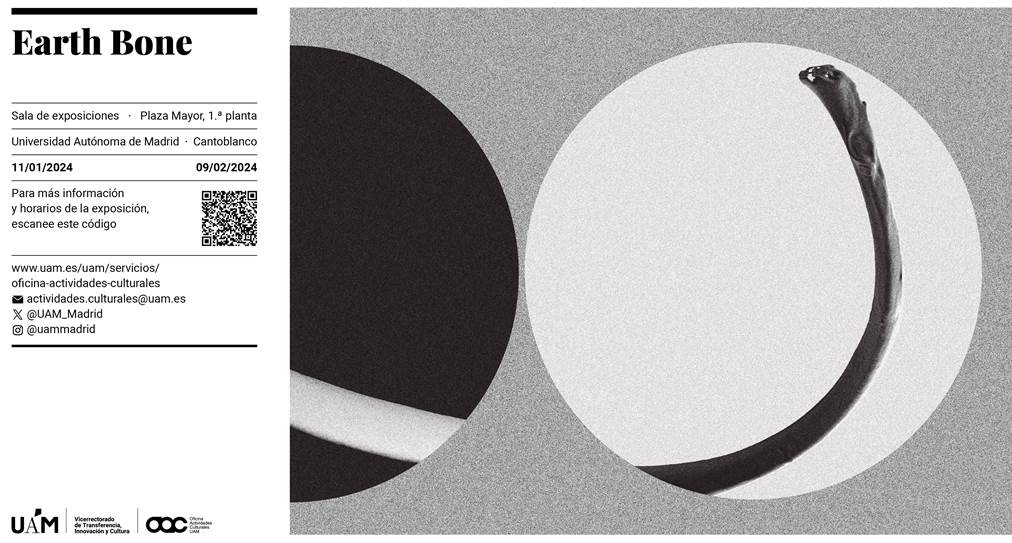
EarthBone is a collaborative artistic and research proposal that emerges from a shared interest in the effects of time on matter and in degradative processes understood both physically and ontologically.
The project approaches transformation as a continuum in which degradative processes can be read through the logic of generative systems, and generative processes can in turn be understood from the perspective of degradation.
The project was developed through the collaboration between artist Elisa Cuesta, architect and programmer Salva Serrano, and researcher Oscar Cambra Moo, opening a transdisciplinary context in which algorithmic thinking, biological structure, degradation and artistic practice become mutually generative.
Drawing on generative algorithms, material experimentation and taphonomic thinking, the project explores how simple rules can give rise to complex behaviours, unstable structures and speculative morphologies linked to growth, alteration and decay.
Inspired by the Thanatia hypothesis, EarthBone situates itself in a plausible scenario in which the planet’s mineral resources have been fully extracted and redistributed through the Earth’s crust as products and residues, producing a technologically exhausted world populated by degrading artefacts and amorphous algorithms.
Within this framework, experimental virtual probes and iterative algorithmic processes based on rules of bone growth and degradation have also opened a relevant line of innovation for the research environment of the LAPP, pointing toward future collaborations between scientific modelling and artistic inquiry.