Art, science and conceptual experimentation
Research
Scientific work focused on vertebrate bone microanatomy, fossil anatomy, quantitative morphology, taphonomy and image-based structural analysis.
Profile
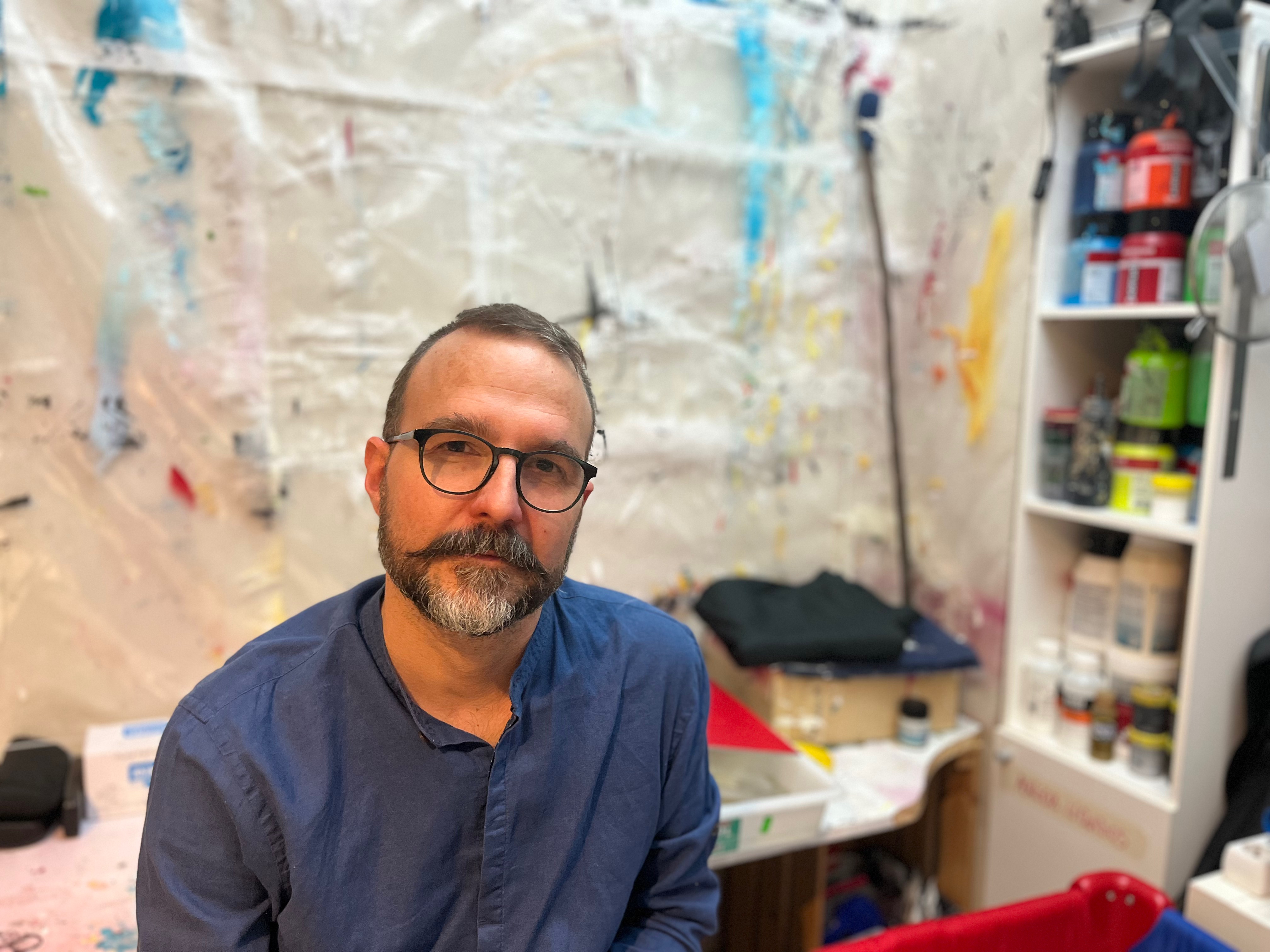
Oscar Cambra
Artist and researcher working across vertebrate bone microanatomy, palaeontology,
taphonomy and image-based structural analysis.
His research focuses on the study of degradative processes and on the taphonomic
dynamics that shape the preservation of biological structures in archaeological
and palaeontological contexts. Combining approaches such as bone histology,
quantitative tissue mapping and advanced imaging techniques including synchrotron
radiation, his work explores new ways of understanding biological structure
through image-based analysis.
Alongside his scientific research, Cambra also develops artistic and hybrid
projects that investigate the relationships between image, structure, decay
and biological form.
Research lines
Current directions
Bone microanatomy, fossil vertebrates and taphonomy, histological interpretation, quantitative structural analysis, cortical organization, internal cavity systems and image-based computational workflows.
Methods
Current directions
Histology and paleohistology, CT-based analysis, spatial (GIS-inspired) analysis of histological data, digital segmentation, geometric modelling, quantitative descriptors and reproducible scientific visualization.
Selected publications
Selected publications
Sanz-Henche P. et al. (2026). Preliminary palaeoecological reconstruction of the Ruidera site (Middle Pleistocene, Southern Iberian sub-plateau). EGU Sphere.
DOI.
Doe D.M. et al. (2026). Puberty in medieval Veranes: Embracing all adolescent skeletons for a more complete picture. Journal of Archaeological Science: Reports. DOI.
Cambra-Moo O. et al. (2024). Preservation and conservation concepts from the transdisciplinary perspective of Taphonomy. Historical Biology. DOI.
López-Rey J.M. et al. (2022). Mineral content analysis in the rib cross-sections of Homo sapiens and Pan troglodytes and its implications for the study of Sts 14 costal remains. American Journal of Biological Anthropology. DOI.
Vallcorba O. et al. (2021). Synchrotron X-ray microdiffraction to study dental structures in Cretaceous crocodylomorphs. Cretaceous Research. DOI.
Cambra-Moo O. et al. (2018). Can histomorphology enhance the analysis of cremated human bones in an archaeological context? Journal of Archaeological Science: Reports. DOI.
Cambra-Moo O. et al. (2015). Multidisciplinary characterization of the long-bone cortex growth patterns through sheep’s ontogeny. Journal of Structural Biology. DOI.
Cambra-Moo O. et al. (2012). Mapping human long bone compartmentalisation during ontogeny: A new methodological approach. Journal of Structural Biology. DOI.
Gupta N.S. et al. (2008). Molecular taphonomy of macrofossils from the Cretaceous Las Hoyas Formation, Spain. Cretaceous Research. DOI.
Doe D.M. et al. (2026). Puberty in medieval Veranes: Embracing all adolescent skeletons for a more complete picture. Journal of Archaeological Science: Reports. DOI.
Cambra-Moo O. et al. (2024). Preservation and conservation concepts from the transdisciplinary perspective of Taphonomy. Historical Biology. DOI.
López-Rey J.M. et al. (2022). Mineral content analysis in the rib cross-sections of Homo sapiens and Pan troglodytes and its implications for the study of Sts 14 costal remains. American Journal of Biological Anthropology. DOI.
Vallcorba O. et al. (2021). Synchrotron X-ray microdiffraction to study dental structures in Cretaceous crocodylomorphs. Cretaceous Research. DOI.
Cambra-Moo O. et al. (2018). Can histomorphology enhance the analysis of cremated human bones in an archaeological context? Journal of Archaeological Science: Reports. DOI.
Cambra-Moo O. et al. (2015). Multidisciplinary characterization of the long-bone cortex growth patterns through sheep’s ontogeny. Journal of Structural Biology. DOI.
Cambra-Moo O. et al. (2012). Mapping human long bone compartmentalisation during ontogeny: A new methodological approach. Journal of Structural Biology. DOI.
Gupta N.S. et al. (2008). Molecular taphonomy of macrofossils from the Cretaceous Las Hoyas Formation, Spain. Cretaceous Research. DOI.
Full list
ORCID profile
Complete and updated publication list available at:
ORCID profile